
About Us
Mission
Using our unique field experience, we open the doors of the authentic rural Patagonian way of life to adventurers, and leave a long-lasting mark on them.
Vision
Be a world reference in the outreach of the Chilean Patagonian cultural heritage and organization of wild horseback trails.
Values

Respect all animals and our environment

Support local community and culture

HAVING A NICE TIME WITH OUR PARTICIPANTS

To be authentic and humble
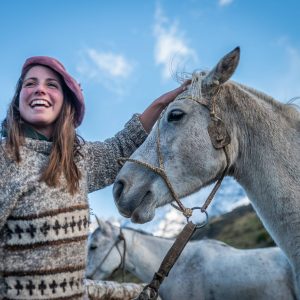
Charlotte FrErot
Lifelong horse lover, Charlotte Frerot left a comfortable life in Paris to seize the reins of her destiny. She studied Sustainable Business Administration and worked with a UN program in Paris before moving to Chile in 2017. After years working on estancias in Torres del Paine and Tierra del Fuego—and driven by her dream of sharing her love for Patagonia’s untamed landscapes and culture—she founded Galope Austral in 2021. Charlotte personally tames and trains her own horses, competes in regional endurance riding championships, and is renowned as a true horsewoman—living an authentic, off-grid life deeply rooted in the spirit of Patagonia.
Born in France, Charlotte speaks French, English, Spanish and has Wilderness First Responder certification. She will be your guide in the wild and the organizer of your journey.
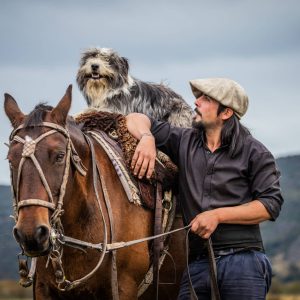
Enrique Bascur
Enrique Bascur grew up around horses from the age of seven. He studied Adventure Tourism and made his way to Chiloé, where he deepened his connection with equine culture. Later, the vast lands of Tierra del Fuego challenged and shaped him. He spent several seasons there, taming wild horses and living the estancia lifestyle, learning from the land and its people. In 2021, his journey brought him to Torres del Paine, where he worked at various hotels before joining the Galope Austral team. Enrique now brings the true gaucho lifestyle to life—with warmth and skill—and shares the countless stories that come with it for a meaningful Patagonian experience.
Enrique speaks English, Spanish and has Wilderness First Responder certification. He will be your expert guide in the wild!
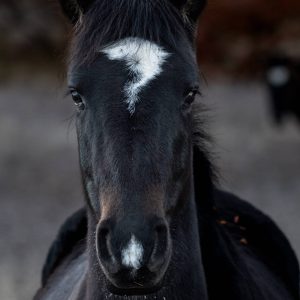
OUR HERD
Our herd of 15 horses is far from a typical tourism riding group. Many of them actively compete in endurance riding, barrel racing, and other equestrian disciplines, making them athletic, sensitive, and exceptionally enjoyable to ride. We have a mix of Arabian, Quarter Horse, Chilean, Criollo, Thoroughbred, and traditional working horses.
Horses remain a fundamental part of local culture, with the Chilean breed standing as a national pride. Patagonian horses are calm, brave, and perfectly adapted to the climate. Tireless and sure-footed on any terrain, they will take you to remote places where few are privileged to go.
Ours are intelligent, full of personality, and highly resilient.
Their welfare is our absolute priority. Despite the challenges of living in such an isolated environment, they receive regular care from several veterinarians, as well as from an equine dentist and a farrier.
Each horse follows a dedicated process of recovery, training, and adaptation before being ridden by our guests. We give them the time they need to develop their physical and mental condition, regain their serenity, and fully thrive in their work. At this stage, we know them deeply and trust them completely.
When not working, they live freely in vast open fields, grazing and moving as a herd, just as a horse should live. We carefully select the ideal companion for each rider, creating a true connection and a team ready for the adventure ahead.
A BIT OF HISTORY
In the late 19th century, in a remote and sparsely populated land at the end of the world, the first settlers arrived in Patagonia to raise sheep.
The combination of immigration, international markets, politics, geography, and climate drove the growth of settlements and the decline of Indigenous communities.
In the 20th century, sheep farming and wool production became a true empire in Patagonia: the Sociedad Explotadora de Tierra del Fuego. Through leases, purchases, and mergers, it came to control up to 3,000,000 hectares and industrialized its operations with the latest European innovations, until its dissolution in 1973.
The Agrarian Reform (1962–1973) finally gave workers the opportunity to access land and manage their own ranches. This is where rural Patagonia as we know it today begins. Baqueanos, skilled horseback explorers and true living maps of the region, began settling on estancias as gauchos.
The Torres del Paine area and the Magallanes region are mostly made up of vast private lands, making it very difficult for travelers to access and explore them.
However, this is where the true essence of Patagonia still remains.